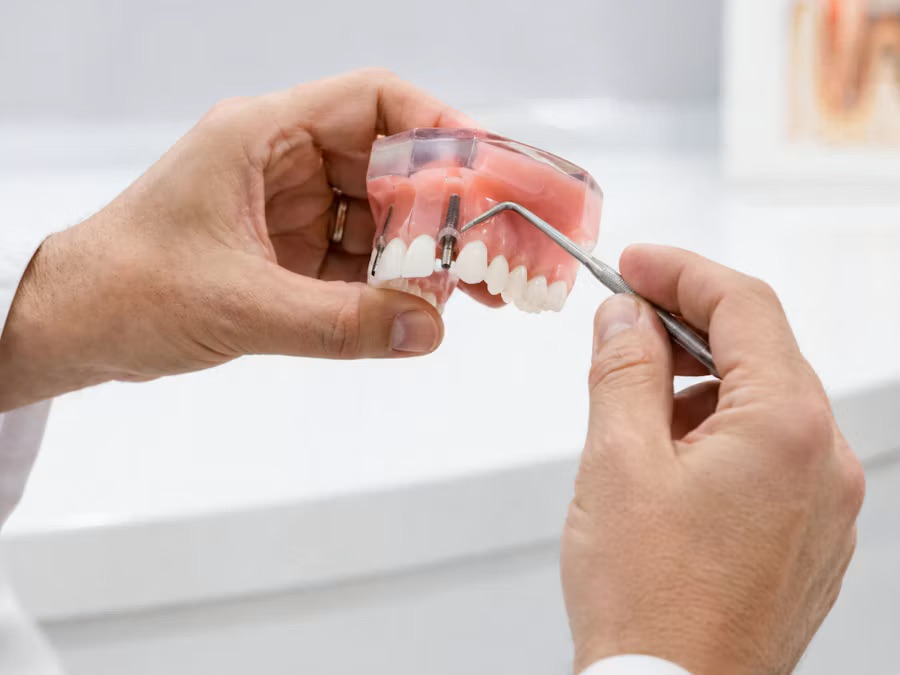
How Do Dental Implants Fuse With the Jawbone? Understanding Osseointegration in Key West
Osseointegration is the healing process that anchors a dental implant within the jawbone. After placement, the surrounding bone heals, remodels, and forms a stable connection with the implant surface. That connection allows the implant to support a crown, bridge, or implant-supported denture.
For patients receiving dental implants in Key West, osseointegration happens beneath the gums over a period of months. Your dental team monitors this healing before the final restoration is placed or fully loaded.
What Is Osseointegration in Dental Implant Treatment?
Osseointegration describes how living bone grows in direct contact with a dental implant. Over time, the implant becomes biologically anchored rather than simply held in place.
The process follows a general path. The implant is placed, the site heals, bone forms against the implant, stability develops, and the restoration follows. Each stage depends on the one before it.
Does a Dental Implant Literally Fuse With Bone?
Not in the way two materials melt together. “Fuse” is a convenient shorthand for a biological process. Living bone forms and remodels against the implant surface, creating a direct, functional connection. The implant remains a separate material, but the bone holds it securely.
What Is the Bone-to-Implant Interface?
The bone-to-implant interface is the microscopic area where the implant surface and living bone meet. This is where osseointegration takes place.
A healthy interface lets bone support the implant much like it once supported a natural tooth root.
Why Is Osseointegration Important for Dental Implant Stability?
A dental implant must withstand daily chewing and bite forces. Those forces travel through the crown or bridge into the implant and the surrounding bone.
Osseointegration allows the implant to act as a firm anchor under that load. Without it, the implant could not reliably support a restoration. It also explains why implant-supported teeth feel more stable than a removable denture.
What Happens Immediately After a Dental Implant Is Placed?
Healing starts as soon as the implant is in place. The early phase involves both mechanical support and the body’s normal repair response.
The Implant Begins With Mechanical Stability
At placement, mechanical stability holds the implant steady. This is called primary stability. It comes from how closely the implant fits within the prepared site and the existing bone.
Primary stability is not osseointegration. It keeps the implant steady while biological healing begins.
A Normal Healing Response Begins Around the Implant Site
A blood clot forms around the implant soon after placement. A normal inflammatory response follows, which is the body’s first step in repairing tissue.
Early tissue repair then begins in the bone and gums. Some swelling and tenderness during this phase is common.
How Does Bone Grow and Remodel Around a Dental Implant?
Bone healing around an implant happens in overlapping stages rather than a strict sequence. In general, healing moves through:
- Early healing at the implant site
- New bone formation near the implant
- Bone building up along the implant surface
- Remodeling and maturing of that bone
- Increasing functional stability
These stages blend into each other over several months.
What Role Do Bone-Forming Cells Play?
Osteoblasts are cells that form new bone. During healing, they help build bone along the implant surface.
Other cells, called osteoclasts, remove older bone. Together, these cells drive bone remodeling, the ongoing cycle of removing and forming bone.
Does Old Bone Stay Around the Implant Permanently?
No. Bone is living tissue that renews itself, and the bone around an implant keeps remodeling over time. Osseointegration is not a one-time gluing event. It creates a living interface that your body maintains.
What Is the Difference Between Primary and Secondary Implant Stability?
Implant stability changes during healing. It starts as mechanical support and gradually becomes biological support.
| Type | What Provides It | When It Matters Most |
| Primary stability | Mechanical fit with existing bone | At implant placement |
| Secondary stability | Biological healing and bone remodeling | Develops during osseointegration |
These are not two unrelated processes. As new bone forms and remodels, biological support gradually takes over from the initial mechanical fit. A stable start helps that transition happen smoothly.
How Long Does Dental Implant Osseointegration Take?
Dental implant osseointegration generally takes several months, but the exact healing period varies. According to the American Association of Oral and Maxillofacial Surgeons, bone and nearby tissues begin healing within days to weeks. New bone then grows and attaches to the implant over the following months.
Healing time depends on:
- The implant site
- Bone quality and quantity
- Whether grafting was done
- Implant stability at placement
- Your overall health
- The treatment and loading plan
Why Can One Implant Heal Faster or Slower Than Another?
Every implant site is different. Bone density, location in the mouth, and available bone all vary. Your health and healing response also play a role.
Two implants in the same mouth may follow different timelines. Your dentist sets expectations based on your specific case.
Does a Bone Graft Make Implant Healing Take Longer?
It can, depending on how treatment is staged. Bone graft healing and osseointegration are separate processes.
In staged treatment, the graft heals first. The implant is placed later and then osseointegrates. In simultaneous treatment, both healing processes take place during overlapping periods. Our guide to bone grafting before implant placement explains how grafting fits into the treatment plan.
Does Jawbone Density Affect Osseointegration?
It can. Bone density can influence how firmly the implant is held at placement. It can also shape implant planning and decisions about when to load the implant.
Lower density does not rule out osseointegration. It may change how your dentist approaches treatment and healing time.
Does Having More Bone Mean an Implant Will Integrate Better?
Not necessarily. Bone quantity and bone quality are different. Quantity is how much bone is present, while quality describes the density and characteristics of that bone.
Integration also depends on implant position, surgical conditions, tissue health, stability, and healing. Plenty of bone helps, but it does not guarantee a result.
What Factors Can Help or Interfere With Dental Implant Osseointegration?
Many factors influence how well an implant integrates. Some depend on the implant site, and others depend on your health and habits.
Implant Stability at Placement
An implant that starts out stable gives bone a steady surface to grow against. Too much movement early in healing can disrupt new bone formation.
Jawbone Quality and Available Bone
Bone that is thin, short, or soft can make initial stability harder to achieve. Your dentist evaluates the bone before placement and plans around it.
Gum and Oral Health
Infection or inflammation near the implant can interfere with healing. Healthy gums help protect the site while bone develops.
Smoking
Smoking is associated with slower healing and a higher risk of implant problems. If you smoke or vape, telling your dentist helps them plan your care.
Diabetes and Other Health Conditions
Your overall health can affect how bone heals. Poorly controlled diabetes and some medications may slow healing. Our article on factors that affect dental implant candidacy covers these in more detail.
Excessive Forces From Grinding or Clenching
Heavy forces on the implant can matter during healing and after the restoration is placed. If you grind or clench, your dentist may adjust your plan to protect the implant.
Oral Hygiene and Postoperative Care
Keeping the surgical site clean lowers the risk of infection during healing. Following your care instructions protects the area while bone forms.
Can a Dental Implant Move While It Is Osseointegrating?
A dental implant is meant to stay stable throughout healing. Noticeable movement is a concern that your dental team should evaluate.
Do not test the implant by pushing or wiggling it. If something feels loose or different, contact your dentist so they can check it.
How Do Dentists Know Whether a Dental Implant Has Osseointegrated?
Dentists use several checks at follow-up visits. No single test tells the whole story.
Clinical Stability Is Evaluated
Your dentist checks whether the implant shows appropriate stability. This assessment happens in the office as part of your follow-up care.
The Healing Site and Surrounding Tissues Are Examined
Your dentist looks at the gums around the implant. They confirm that healing is progressing and watch for signs of infection or other complications.
Imaging May Be Used as Part of Follow-Up
X-rays can show the bone around the implant and nearby structures. However, an X-ray cannot show integration at the microscopic level. It is one part of a broader evaluation.
When Can the Final Crown Be Placed After Osseointegration?
The final restoration is placed once your dental team confirms adequate healing and stability. The gum tissue also needs time to mature around the implant.
Depending on your plan, the restoration may be:
- A single crown
- An implant-supported bridge
- An implant-supported denture
Your dentist schedules this step based on how you heal, not a fixed date.
Can a Dental Implant Be Used Before Osseointegration Is Complete?
Sometimes. When clinical conditions allow, an implant may support a temporary restoration early in treatment. Some plans also use an early loading approach.
Early use does not mean osseointegration has finished. Bone is still healing around the implant, so your dentist will give specific instructions about chewing.
Is Same-Day Implant Placement the Same as Same-Day Loading?
No. These terms describe different parts of treatment:
- Immediate placement: The implant is placed during the same appointment as the tooth extraction.
- Immediate loading: A restoration is attached early, according to the treatment plan.
- Osseointegration: Bone healing continues after placement either way.
A patient can have one without the other.
What Happens if a Dental Implant Does Not Osseointegrate Properly?
Sometimes stable integration does not develop as planned. When that happens, the implant cannot reliably support a restoration.
Your dentist usually identifies this during follow-up visits. If a concern is found, they will explain the likely cause and your options.
Does Failed Osseointegration Mean You Can Never Have Another Implant?
Not necessarily. The next step depends on the cause, the site, the remaining bone, how the area heals, and your health. Your dentist will discuss whether another implant may be possible.
Is Osseointegration the Same as Complete Dental Implant Healing?
Not exactly. Implant treatment involves several healing processes:
- Bone integration with the implant
- Gum tissue healing and maturation
- The restorative phase
“Healed” is not a single moment. Each tissue and stage progresses on its own timeline.
Does Osseointegration Continue After the Crown Is Placed?
In a sense, yes. Bone around the implant keeps remodeling throughout life, so osseointegration is not a frozen event.
Long-term implant health depends on healthy gums, good hygiene, balanced bite forces, and regular dental visits.
How Is Osseointegration Different From Bone-Graft Healing?
They serve different purposes. Bone graft healing rebuilds or preserves bone volume at the implant site. Osseointegration is living bone forming a direct connection with an implant after placement.
A bone graft can help create an implant site. Osseointegration occurs after the implant itself is placed.
How Is Osseointegration Different From Ridge Augmentation?
Ridge augmentation changes the anatomy of the jaw. It rebuilds a ridge that is too narrow, short, or uneven for an implant.
Osseointegration anchors the implant within that rebuilt or natural bone. Our guide on rebuilding a deficient alveolar ridge explains when that earlier step is needed.
What Can Patients Do During Dental Implant Healing?
You can support healing by:
- Following your provider’s instructions
- Keeping up with recommended oral hygiene
- Avoiding pressure or disturbance at the implant site
- Following dietary and activity guidance
- Attending every follow-up visit
- Telling your dentist about any changes in your health
Why Is Follow-Up Important During Osseointegration?
Follow-up visits connect healing to the next step in treatment. They let your dentist monitor stability and decide when the implant is ready for its restoration. Regular check-ins also allow your dentist to adjust the plan if healing is slower than expected.
How Is Dental Implant Healing Monitored in Key West, FL?
Patients receiving dental implants in Key West need follow-up throughout healing and the restorative stage. Implant treatment does not end when the implant is placed.
Valent Dental’s New Town office provides implant placement and implant restorations. The team can coordinate the surgical and restorative stages as your implant site heals.
Frequently Asked Questions About Dental Implant Osseointegration
What does osseointegration mean?
Osseointegration means living bone grows in direct contact with a dental implant. This connection anchors the implant so it can support a replacement tooth.
How long does it take for a dental implant to fuse with the jawbone?
It generally takes several months. The exact time depends on your bone, the implant site, any grafting, and your overall health.
Can you feel a dental implant osseointegrating?
Usually not. Bone integration happens at a microscopic level. You may notice tenderness or swelling early on, but that comes from surgical healing.
Does bone actually grow around a dental implant?
Yes. New bone forms along the implant surface and remodels over time. This creates the interface that holds the implant in place.
How does a dentist know when an implant is ready for a crown?
Your dentist checks implant stability, examines the gums, and may take X-rays. When healing is adequate for your case, restorative treatment can begin.
Can you chew normally while an implant is healing?
It depends on your treatment plan. Many patients follow a modified diet during healing. Your dentist will explain what is safe for your situation.
Can an implant fail to integrate with the jawbone?
Yes, although it is not the expected outcome. Your dentist monitors healing to catch problems early and will explain options if integration does not develop.
Does a bone graft need to heal before osseointegration begins?
It depends on the plan. In staged treatment, the graft heals before the implant is placed. When both are done together, the healing periods overlap.
Learn How Your Dental Implant Healing Will Be Monitored in Key West
Dental implant treatment involves both surgical placement and biological healing before the implant supports its final restoration. Valent Dental can evaluate your implant site, explain the expected healing sequence, and monitor your progress as part of an individualized implant plan. To get started, request an implant consultation with our Key West team.